
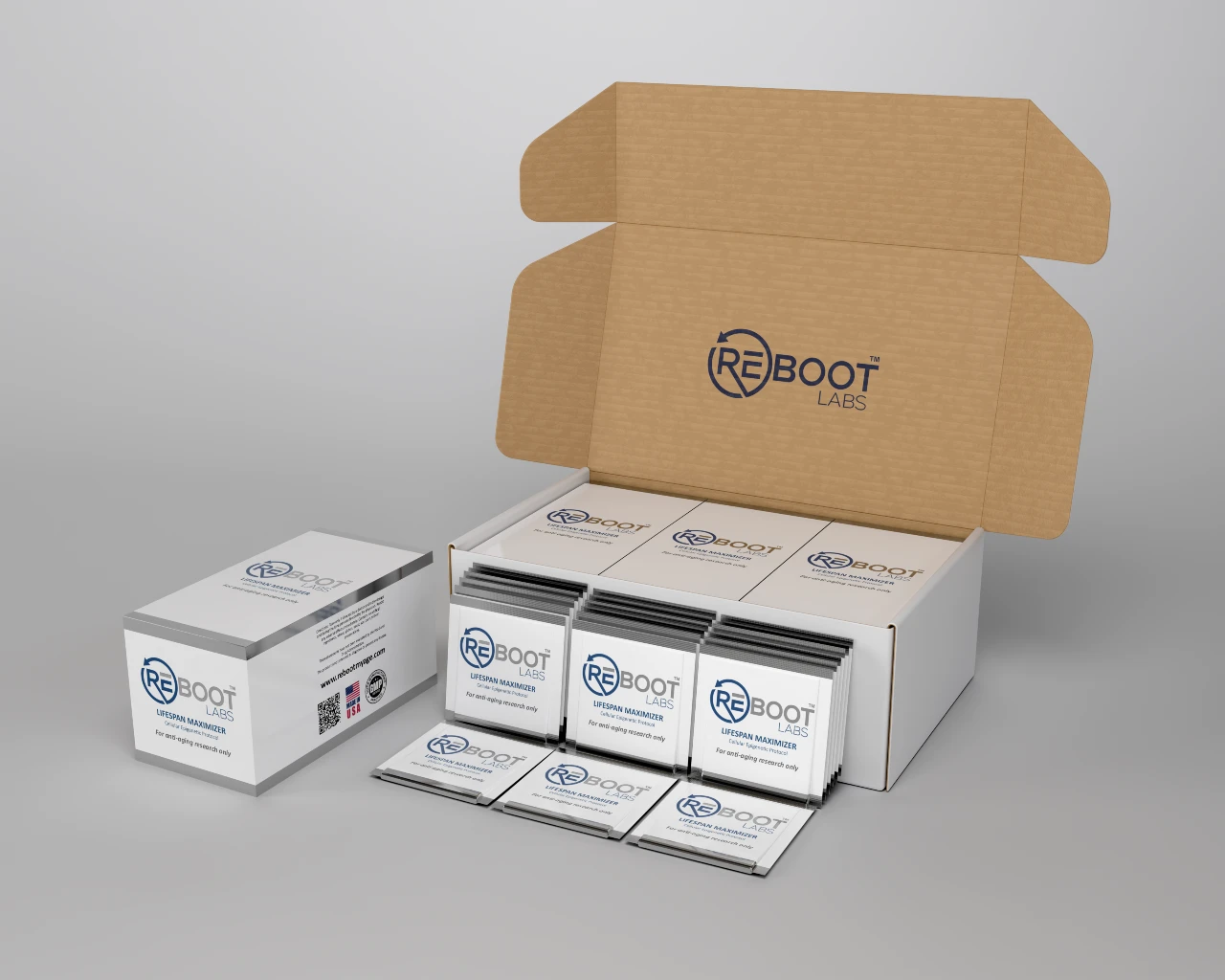
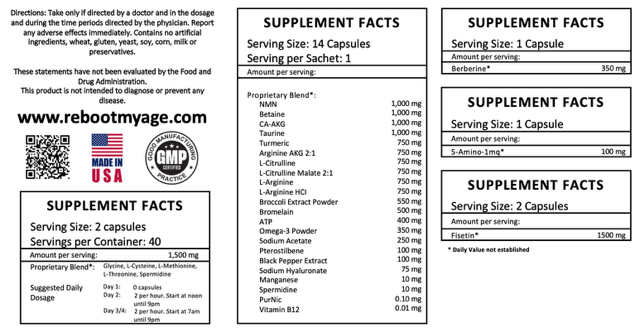
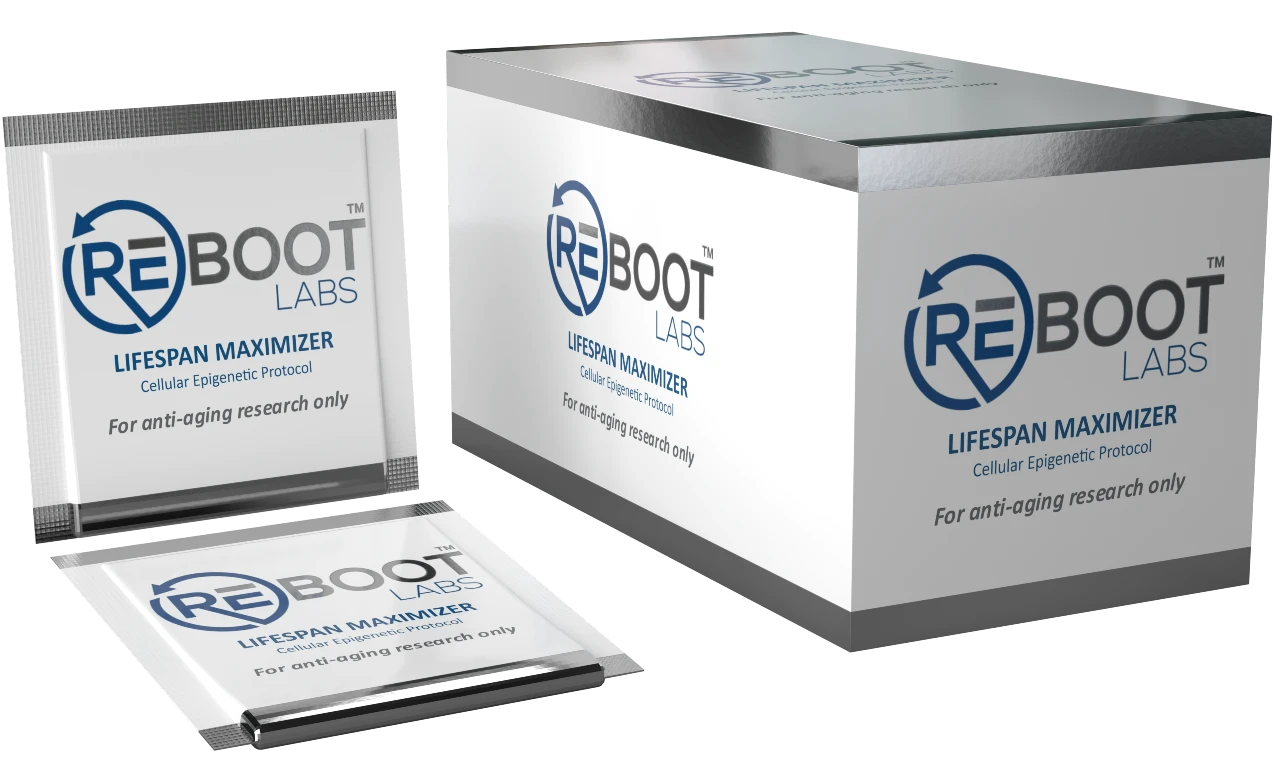
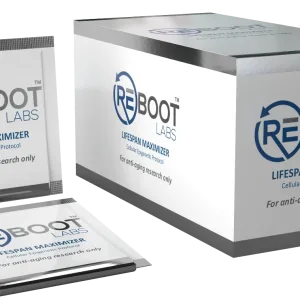
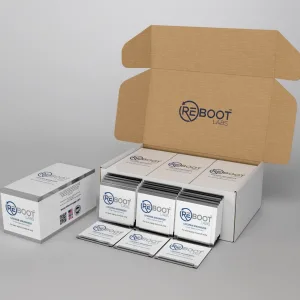
 Lifespan Maximizer
Turn back time
World’s first age reversal protocol
Reboot Labs Lifespan Protocol stands alone as the ultimate age-reversal cornerstone, uniquely targeting all 36 anti-aging pathways with precision-matched, science-backed ingredients for unmatched longevity optimization.
The Lifespan Protocol revolutionizes age-reversal by comprehensively mapping its potent compounds—like NMN for SIRT1 and NAD+ metabolism, sulforaphane for mTOR and Nrf2, and spermidine for autophagy and FOXO—to every one of the 36 critical anti-aging pathways outlined in advanced longevity research. Unlike fragmented supplements that address only a handful of mechanisms, this protocol delivers synergistic coverage across sirtuins, inflammation (NF-κB, NLRP3), proteostasis, senescence (fisetin), and even niche pathways like Klotho, Wnt, and stem-cell quiescence, ensuring no aging driver is left unchecked. This holistic blueprint, derived from meticulous matching of top agents to each pathway, positions it as superior to all competitors by activating the full spectrum of cellular repair and rejuvenation processes.
At its core, the protocol’s superiority stems from its evidence-based ingredient synergy: berberine tackles AMPK and insulin/IGF-1, curcuminoids suppress PI3K/Akt and PANoptosis, while Ca-AKG supports telomere maintenance and RasGrf1 via 5-Amino-1MQ, creating a cascading effect that amplifies outcomes beyond isolated interventions. It even bridges gaps in challenging areas like melatonin signaling and endogenous retroviruses through indirect powerhouses like omega-3s and sulforaphane, achieving near-total pathway dominance where others falter. This makes it not just a supplement, but a foundational regimen mimicking the most potent interventions from caloric restriction to senolytics.
As the cornerstone of age-reversal, the Lifespan Protocol empowers users to rewrite their biological age by hitting all 36 pathways daily, backed by preclinical and clinical data for ingredients like NMN’s NAD+ boosts and spermidine’s lifespan extension in models—delivering transformative vitality, resilience, and youthfulness in one unparalleled formula.
These statements have not been evaluated by the Food and Drug Administration.
This product is not intended to diagnose, treat, cure, or prevent any disease.
The World’s first and most potent LIFESPAN Protocol
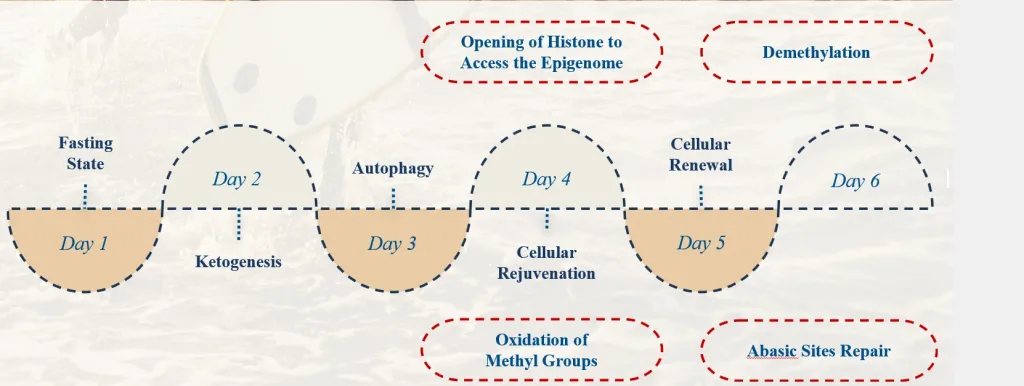
The 36 anti-aging Pathways
# |
Pathway |
Lifepan Protocol |
Description |
1 |
Sirtuin (SIRT1) |
NMN |
NMN raises NAD+, which is required for SIRT1 activity and has human data for increasing blood NAD+. |
2 |
mTOR |
Sulforaphane |
Nrf2 activator that also exerts indirect mTOR‑modulating, caloric‑restriction‑mimetic effects; closest option in your list. |
3 |
AMPK |
Berberine |
Strong AMPK activator with metformin‑like effects in preclinical and clinical metabolic studies. |
4 |
Insulin/IGF‑1 |
Berberine |
Improves insulin sensitivity and glucose metabolism via AMPK and insulin‑signaling modulation. |
5 |
NF‑κB |
Curcuminoid |
Potently suppresses NF‑κB activation and downstream inflammatory cytokines in many models. |
6 |
FOXO |
Spermidine |
Promotes autophagy and modulates AKT/FOXO signaling; considered a key fasting‑mimetic polyamine. |
7 |
Nrf2 |
Sulforaphane |
One of the most potent nutrigenomic Nrf2 activators known, with good oral bioavailability. |
8 |
PI3K/Akt |
Curcuminoid |
Curcumin can inhibit PI3K/Akt signaling in multiple cell models, including cancer and inflammatory pathways. |
9 |
Autophagy (macroautophagy) |
Spermidine |
Robust natural autophagy inducer that extends lifespan in several species. |
10 |
NAD+ metabolism |
NMN |
Human trials show oral NMN raises whole‑blood NAD+ and related metabolites and appears safe at studied doses. |
11 |
Telomere maintenance |
Ca‑AKG |
Among your list, Ca‑AKG has direct mammalian lifespan/healthspan data and may indirectly support telomere stability via reduced inflammation. |
12 |
Epigenetic regulation |
Spermidine |
Functions as an epigenetic regulator of autophagy through effects on histone acetylation (EP300) and chromatin. |
13 |
Mitochondrial biogenesis/dynamics |
NMN |
By boosting NAD+, NMN supports sirtuin‑ and PGC‑1α–driven mitochondrial biogenesis and function. |
14 |
Cellular senescence & SASP |
Fisetin |
Senolytic flavonoid with strong preclinical data for reducing senescent cells and SASP factors in mice. |
15 |
Proteostasis |
Spermidine |
Enhances autophagic clearance of damaged proteins, improving proteostasis in aging models. |
16 |
Inflammation‑related cell death |
Curcuminoid |
Broad‑spectrum anti‑inflammatory that modulates NF‑κB, NLRP3, and multiple programmed‑cell‑death pathways. |
17 |
GSK‑3 |
Omega‑3 |
Not a classic GSK‑3 inhibitor, but omega‑3 PUFAs modulate GSK‑3–linked pathways in neuroinflammation and mood; best fit within your list. |
18 |
PPAR (α/γ) |
Omega‑3 |
EPA/DHA activate PPARα/γ, improving lipid metabolism and inflammation. |
19 |
NLRP3 inflammasome |
Curcuminoid |
Curcumin directly suppresses NLRP3 activation and IL‑1β maturation in preclinical models. |
20 |
HSP expression |
Sulforaphane |
Nrf2 activators like sulforaphane induce multiple cytoprotective genes, including some heat‑shock proteins. |
21 |
Oxidative stress recovery |
Sulforaphane |
Strongly induces endogenous antioxidant and phase‑II detox enzymes via Nrf2. |
22 |
Glutathione metabolism |
Betaine |
Betaine best supports methylation and redox balance; it can influence homocysteine and indirectly support glutathione cycling. |
23 |
Melatonin signaling |
None cleanly |
None of the listed agents directly agonize melatonin receptors; this pathway would need actual melatonin. |
24 |
Estrogen receptor (female) |
Omega‑3 |
Weak, indirect; omega‑3s modulate estrogen‑related lipid and bone pathways but are not ER ligands. |
25 |
IGF & SREBP lipid signaling |
Berberine |
AMPK activation suppresses SREBP‑driven lipogenesis and modulates IGF‑related metabolic pathways. |
26 |
Ras‑Erk‑ETS |
Curcuminoid |
Curcumin inhibits ERK and related MAPK signaling in several cancer and inflammatory models. |
27 |
Wnt signaling |
Ca‑AKG |
AKG influences stem‑cell and bone biology where Wnt signaling is central; limited but closest option in your list. |
28 |
Sonic hedgehog |
Curcuminoid |
Curcumin shows hedgehog‑pathway inhibition in some cancer models; again, best available fit. |
29 |
Klotho protein |
Ca‑AKG |
AKG supplementation improves healthspan and reduced inflammatory markers; kidney‑mineral axis links suggest an impact on Klotho/FGF23 signaling. |
30 |
Ketone body metabolism |
Sodium acetate |
Acetate is a short‑chain fatty acid and can be converted to acetyl‑CoA, overlapping with fasting/ketosis‑related signaling; closest hit in your list. |
31 |
Retrotransposable elements |
Curcuminoid |
Epigenetically active polyphenol; curcumin modulates DNA methylation and histone marks that can repress retroelements. |
32 |
NETosis |
Omega‑3 |
EPA/DHA reduce neutrophil activation and NET release in inflammatory states. |
33 |
PANoptosis |
Curcuminoid |
Integrator of pyroptosis/apoptosis/necroptosis; curcumin’s broad inflammasome and NF‑κB inhibition makes it the best lever here. |
34 |
Endogenous retrovirus “resurrection” |
Sulforaphane |
Through Nrf2‑driven antioxidant and detox responses and epigenetic interactions, sulforaphane is your strongest indirect candidate. |
35 |
Stem‑cell quiescence |
Spermidine |
Autophagy and FOXO modulation by spermidine support stem‑cell maintenance and quiescence in preclinical data. |
36 |
RasGrf1 signaling |
5‑Amino‑1MQ |
NNMT inhibitor that preserves NAD+, enhances SIRT1 signaling, and influences Ras/ERK/IGF‑linked pathways in preclinical work. |